Behind the scenes
Superstes, the fern of Magnifica Humanitas
In Paris, in the last room of Magnifica Humanitas, a fern older than flowers sets the pace of a face. The story of a work that takes the rhythm out of the artist’s hands.
Every season of art has had its altar. The Renaissance painted it, the twentieth century took it apart, video art switched it on: Nam June Paik placed a Buddha in front of its own live broadcast face, and the television became a chapel. Matteo Basilé, who has worked on the human face for thirty years, takes a sideways step in Paris and hands the altar to a plant.
An exhibition in three movements
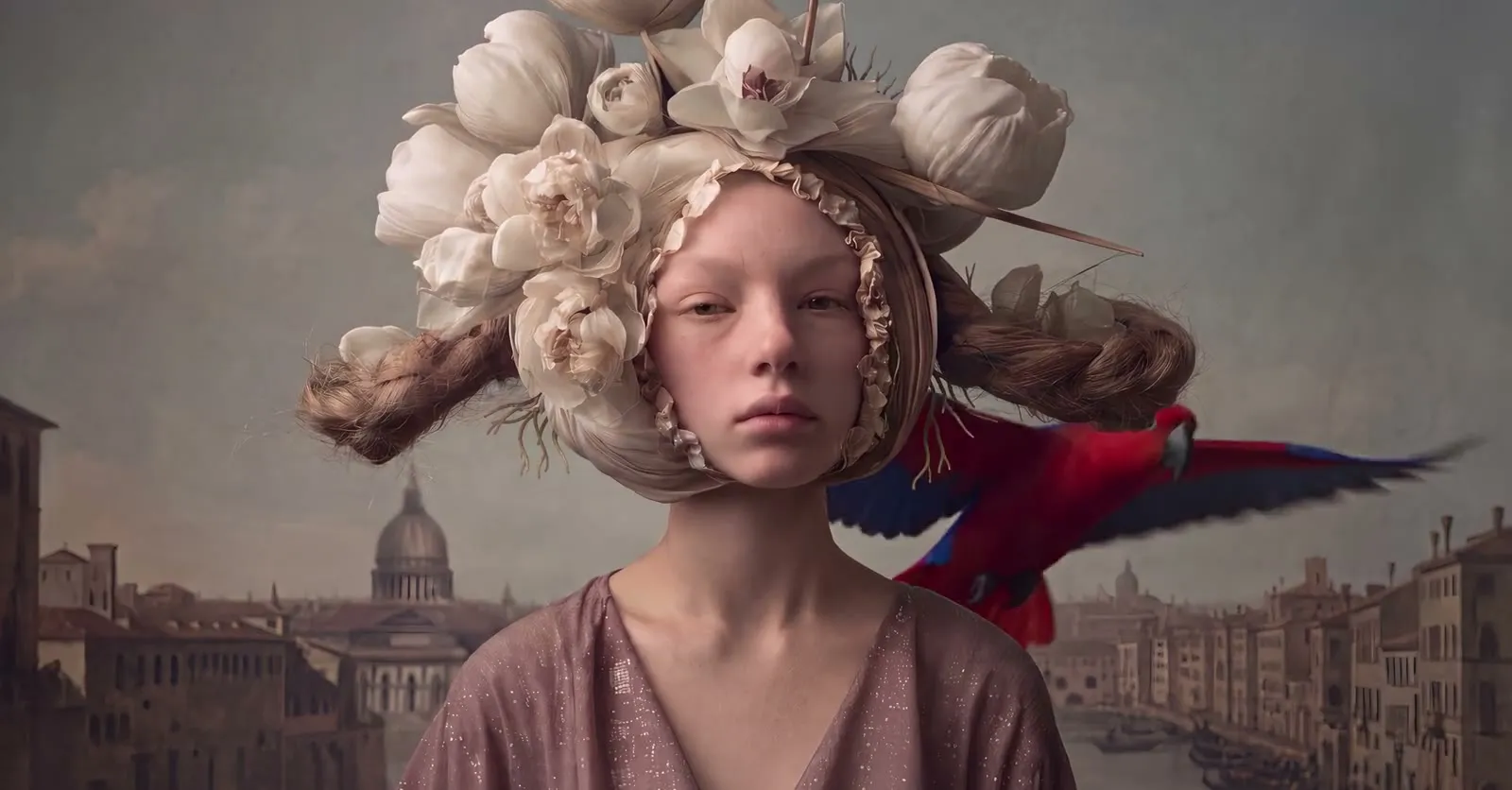
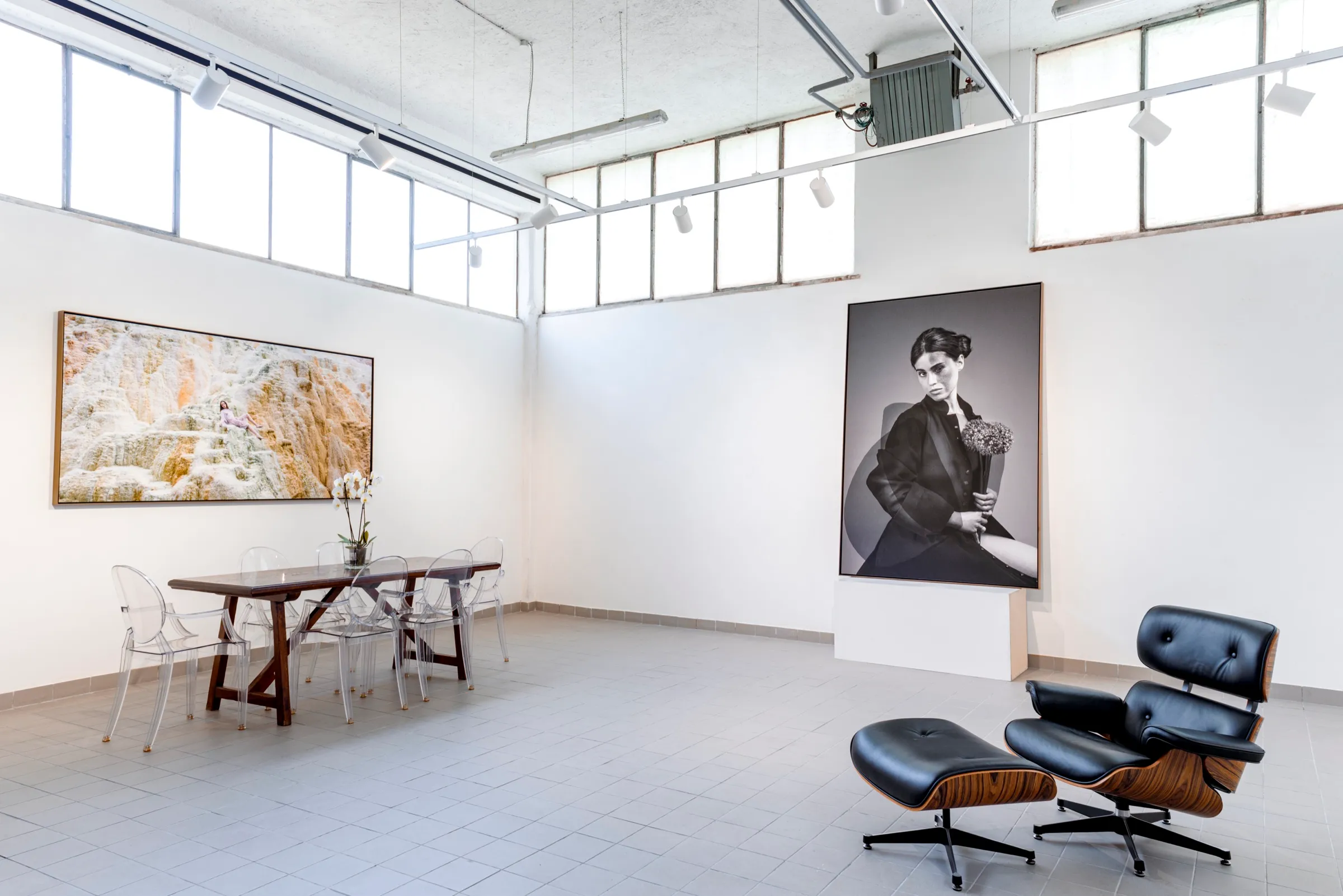
Magnifica Humanitas opens at the Italian Cultural Institute in the Hôtel de Galliffet, curated by Antonio Calbi and Dominique Moulon, during Paris Photo. The opening is on 12 November 2026 and the show runs until 22 January 2027. The title comes from the first encyclical of Leo XIV, devoted to the human person in the age of artificial intelligence. Some forty works, almost all in black and white, in the year photography turns two hundred.
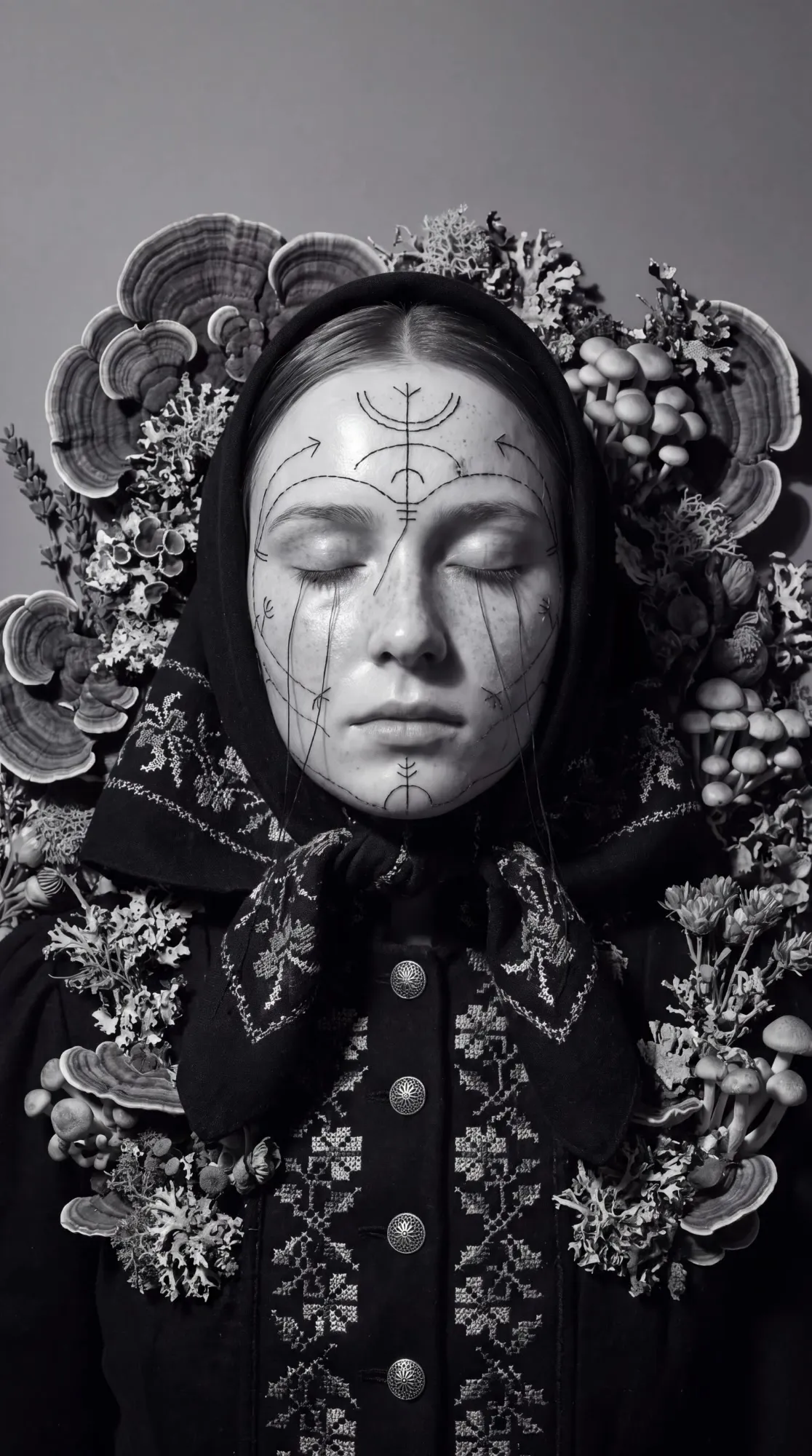
The route has three movements. The portraits are unique pigment and powder prints on cotton paper, engraved by hand, where candle smoke gathered in Roman churches becomes paint: a predella of lay saints beneath coffered ceilings. The film, inspired by Dante’s trasumanar, crosses a land without borders, with music by Marco Del Bene (MKDB). Then the last room.
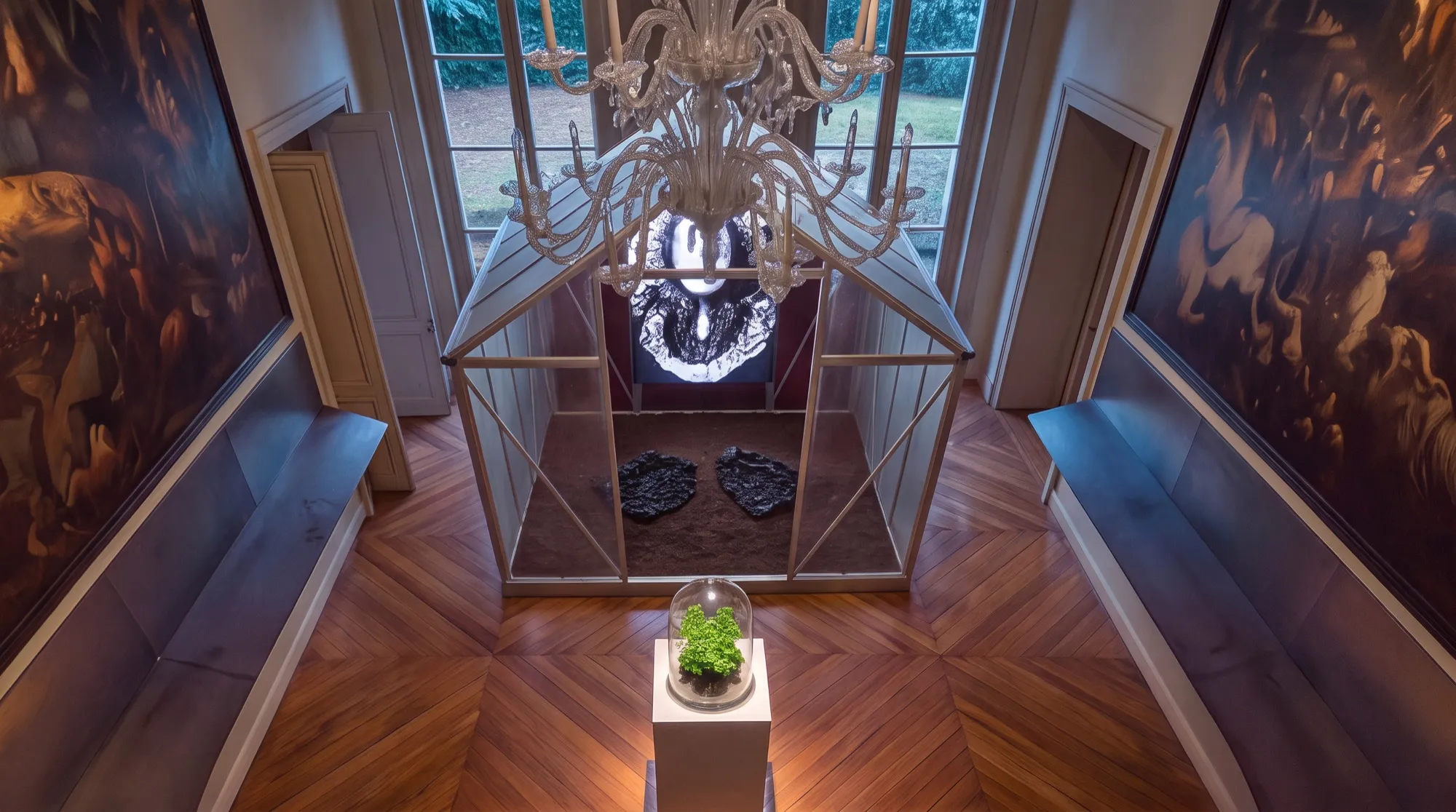
The plant altar
There a greenhouse becomes a glass chapel. Inside lives a real fern, Osmunda regalis, from a botanical family born before the Earth knew flowers. In 2014 a team of palaeobotanists described in Science a Swedish fossil of this family, a hundred and eighty million years old, with its cell nuclei still readable: the genome had stayed almost identical to that of the ferns growing along ditches today. Superstes, in Latin, is the one who survives and can therefore bear witness. Here the title is a statement of fact.
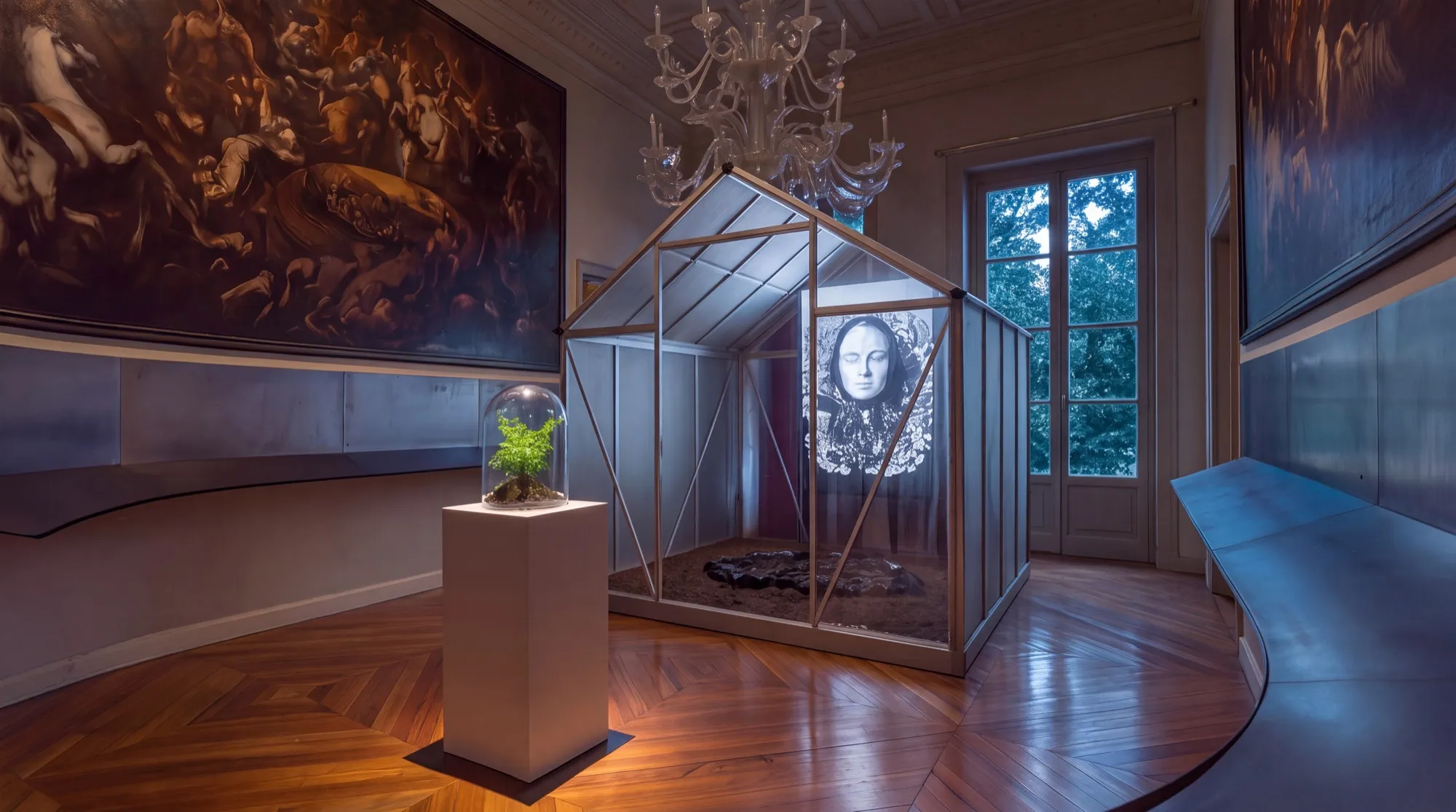
For months the fern lived in the studio in Rome with two electrodes on its fronds. The clean recording is short, thirty-eight minutes on an October morning, but it says one clear thing: at rest the signal barely moves, and at the touch of a hand it leaps and falls back over six to eight seconds. From those minutes the artist built a model, declared as such, that imagines seven months of the plant’s life.
Who sets the rhythm
This is the reversal. The fern’s impulses become sound, then rhythm, then change in a face projected where the altar would stand in a church. The emotions of the face are a vocabulary chosen by the artist; the number of states that vocabulary is spread across is decided by the plant. The author stays, but gives up the timing. Bio-art has known this gesture for a long time, from Jagadish Chandra Bose’s measurements of plants’ electrical responses at the start of the twentieth century to Stefano Mancuso’s plant neurobiology labs, and Basilé brings it inside the old grammar of the devotional portrait.
Like the other works in the exhibition, Superstes is phygital: bringing a device close opens a second state of the image, like altarpieces that opened only on feast days. The artist’s text keeps observation, model and interpretation apart, and declares the checks still to be done. It is a rare kind of honesty at a time that asks machines and plants to say more than they know.
Sources
- Istituto Italiano di Cultura di Parigi, comunicato stampa «Magnifica Humanitas», 9 ottobre 2026 (opens in a new tab)
- Matteo Basilé, Magnifica Humanitas, pagina della mostra (opens in a new tab)
- Matteo Basilé, «Superstes», testo dell’autore, Roma, ottobre 2026
- B. Bomfleur, S. McLoughlin, V. Vajda, «Fossilized nuclei and chromosomes reveal 180 million years of genomic stasis in royal ferns», Science 343, 2014 (opens in a new tab)
- J. C. Bose, Response in the Living and Non-Living, Longmans, Green and Co., 1902
- S. Mancuso, A. Viola, Verde brillante. Sensibilità e intelligenza del mondo vegetale, Giunti, 2013
- Paris Photo 2026 (opens in a new tab)
Credits
Image: Matteo Basilé, Magnifica Humanitas, 2026. Music for the exhibition film: Marco Del Bene (MKDB).
Text: Airona Altman.