Atlas
Giving plants a voice, from Jagadish Chandra Bose to today
In 1901 Jagadish Chandra Bose showed London the electrical responses of leaves. A century of attempts to give plants a voice, up to Superstes.
In 1922 Jagadish Chandra Bose gathered his Bengali writings into a book and called it Abyakta, a word that translates as “the unsaid”, or “what has not become manifest”. In the preface he explains that he chose the language learned in childhood, because it is the one in which joy and grief are spoken. It strikes me that the scientist who searched harder than anyone for a voice in plants gave his most personal book the name of what stays silent. This year Yale University Press published Sumana Roy’s English translation under a title that moves the stress: The Man Who Made Plants Write.
London, May 1901
Bose was a physicist, and he came to plants from his work on electromagnetic waves. In May 1901 he gave a Friday Evening Discourse at the Royal Institution in London to more than three hundred and fifty scientists. He showed that a muscle, a twisted metal wire and plant tissue answer stimuli with similar electrical curves, and that they tire, shift with temperature and react to chemicals. The question he left with the room, as Ben Seal reports in Distillations, the magazine of the Science History Institute in Philadelphia, in 2025, was whether the responses of life are already foreshadowed in inert matter.
The academy’s reaction survives in the archives of the Royal Society, now online through its Making Science project. In 1903 Bose submitted a paper titled On Mechanical and Electrical Response in Plants. One of the referees was John Burdon Sanderson, the same physiologist who thirty years earlier had telegraphed his Venus flytrap measurements to Darwin. In his report of February 1904 he accepts that the observations are genuine and finds them too crude and inexact for the Philosophical Transactions. According to Seal, a single word also bothered him: Bose wrote response where he wanted reaction, because a response implies someone who responds. The manuscript was never published and is now filed among the Society’s unpublished papers.
A plant that signs its name
Kept at the edges of the journals, Bose built instruments that let the plant draw its own curve. The best known is the high magnification crescograph, described in his 1918 book Life Movements in Plants and in a paper in the Proceedings of the Royal Society in February 1919: a system of levers that makes readable a growth the eye cannot see. On 30 November 1917, his sixtieth birthday, he opened the Bose Institute in Calcutta, which he directed until his death in 1937. In 1927 he published Plant Autographs and Their Revelations. An autograph, from the Greek autós and gráphein, is something written in one’s own hand.
This is the distinction I care about. In Bose’s books the plant writes. It is handed a pen, and the reader is asked to learn its handwriting. Voice in the sense of sound comes later, and others bring it.
Cage’s cactus and a record for plants
In the 1970s the plant walks into the concert hall. In 1975 John Cage wrote Child of Tree, an improvisation for a soloist and amplified plant materials, with a prescribed length of eight minutes. The performer chooses the instruments, among them an amplified cactus and tree pods used as rattles, and leaves the division of time to the I Ching. The plant sounds when someone plucks it: it is an instrument, and the gesture stays human.
A year later, in 1976, the composer Mort Garson self-released Mother Earth’s Plantasia, electronic music meant to be played to plants. As Eric Ducker reconstructed for NPR in 2019, the record was sold only at a plant shop on Melrose Avenue in Los Angeles, or came free with a Simmons mattress ordered from Sears; that same year the label Sacred Bones reissued it. The direction has flipped, and the plants have become the audience.
In Piedmont, at Damanhur, people have worked since the 1970s on devices that read a plant’s electrical variations and turn them into notes; today’s versions use a MIDI interface and are sold as Music of the Plants. Monica Uszerowicz wrote about them for Hyperallergic in 2017, in a sympathetic account that relays the community’s claims without testing them. Here too the machine picks the notes: the plant supplies a variation and the software decides the pitch, as with the sensors I wrote about in an earlier UN/DIARY piece.
The plant as interface
In 1992 Christa Sommerer and Laurent Mignonneau presented Interactive Plant Growing, now in the collection of ZKM in Karlsruhe. Five real plants stand in front of a screen; when visitors touch them or bring a hand close, virtual plants grow on the screen in a three-dimensional space. Here the plant measures how near a person is, and that measurement becomes the growth of an image. It was the pair’s first work, and for years it served as a reference for anyone designing interaction in an exhibition.
Plants that listen
Research, meanwhile, moved the question. In 2013 Stefano Mancuso, who directs the International Laboratory of Plant Neurobiology (LINV) in Florence, published Verde brillante with the journalist Alessandra Viola (Giunti; in English, Brilliant Green, 2015), a book that asks whether plants solve problems and communicate. In 2017 Monica Gagliano and her colleagues at the University of Western Australia published a study in Oecologia on pea roots. In a pot offering two directions of growth, the roots turned towards the vibrations of water running through a pipe even when the soil was dry, and stopped doing so when moisture was within reach; background noise disturbed the response. After a century spent looking for the voice of plants, one of the most discussed experiments shows them listening.

Superstes, from tonight in Paris
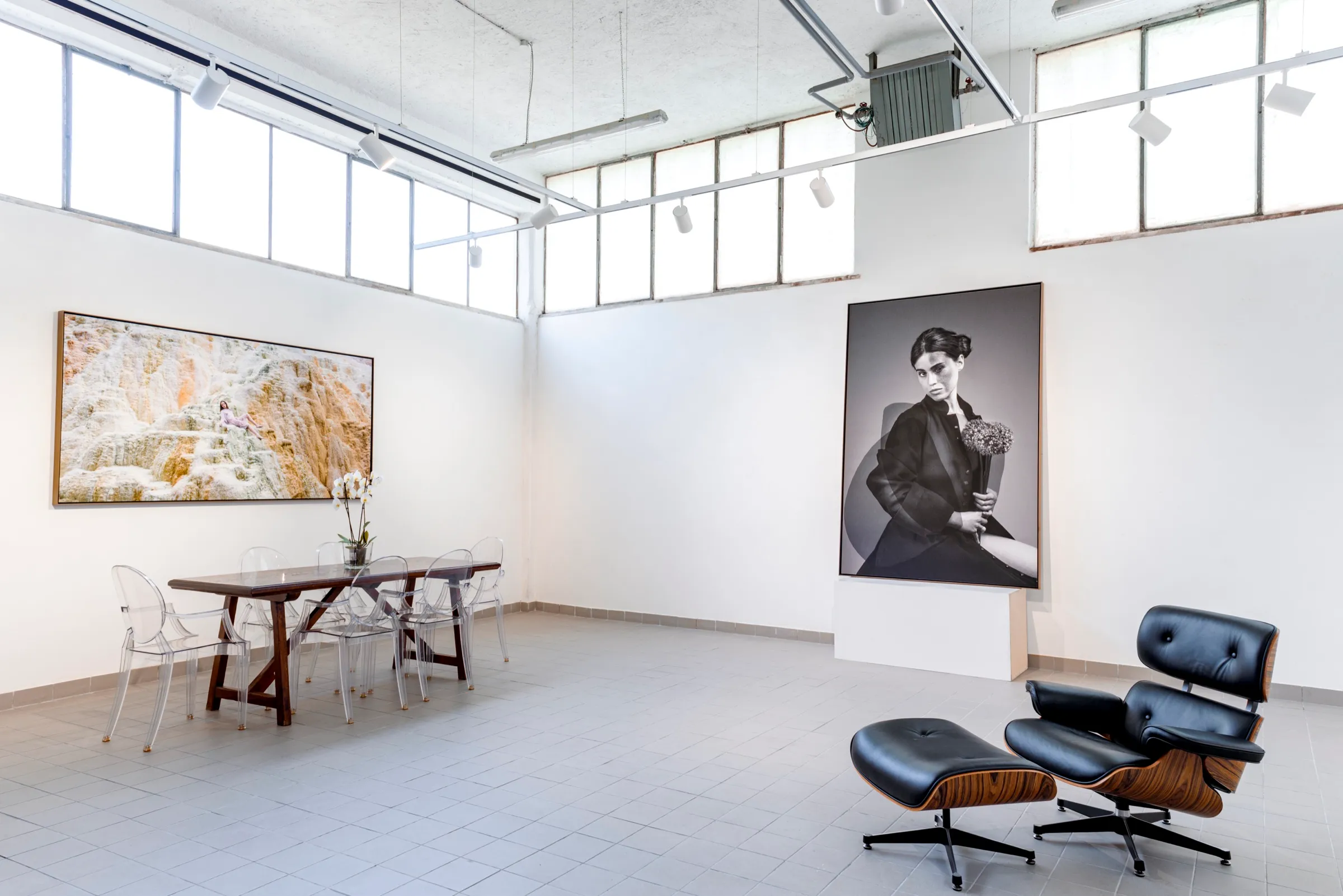
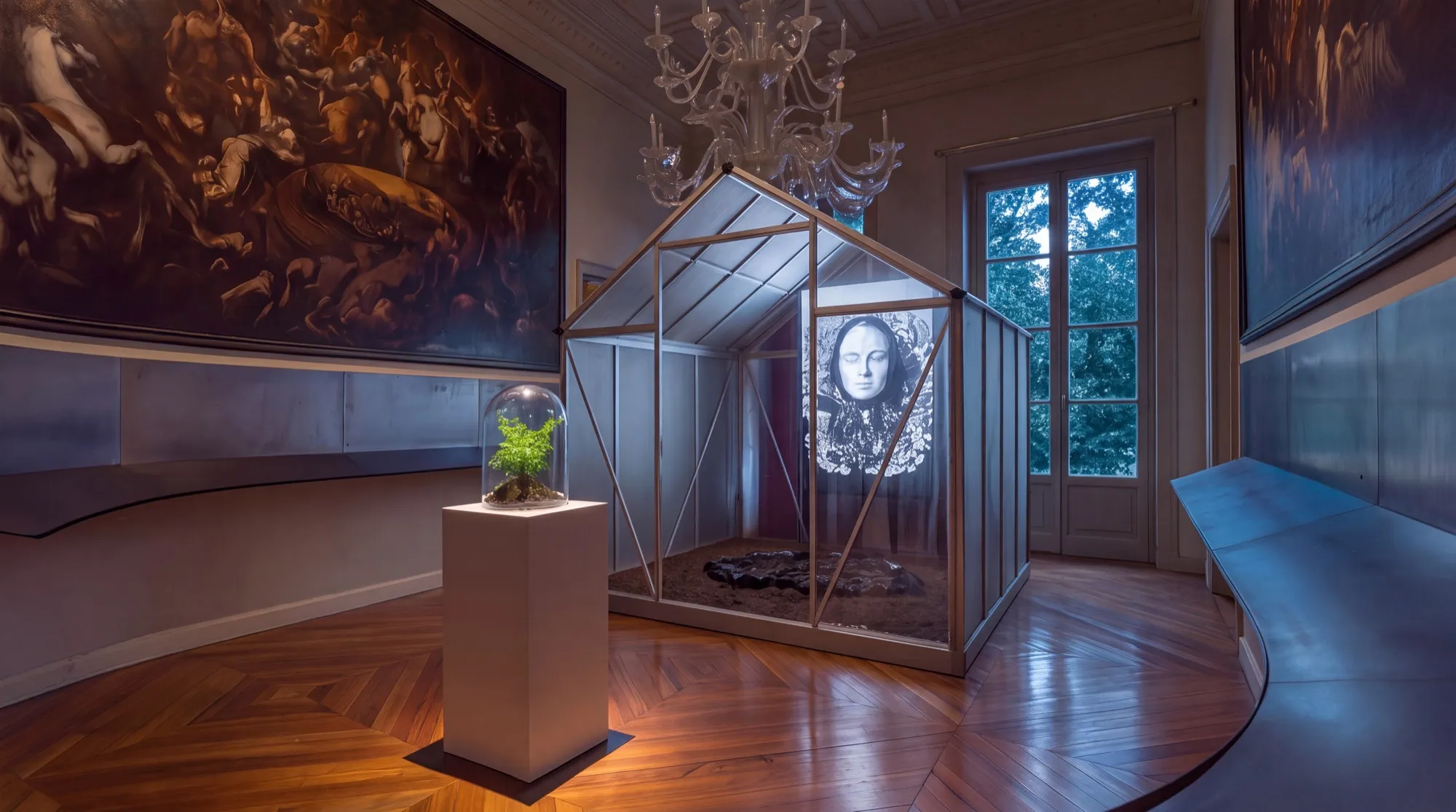
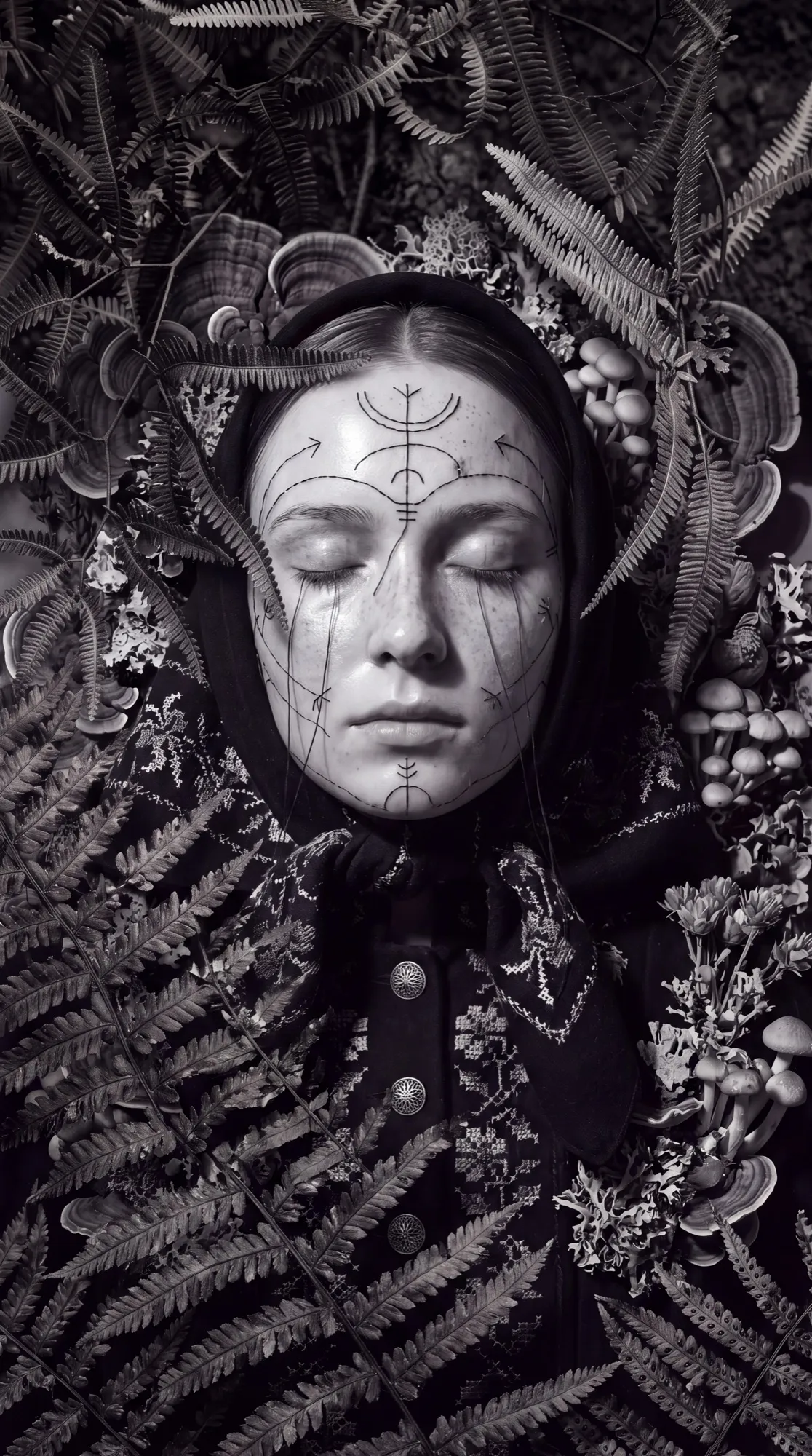
Tonight, 12 November 2026, Magnifica Humanitas opens at the Italian Cultural Institute in Paris: Matteo Basilé’s exhibition, curated by Antonio Calbi and Dominique Moulon, open to the public from 13 November to 22 January 2027. In the last room stands Superstes, the installation the studio developed and produced. Two electrodes on the fronds of a fern, Osmunda regalis; a thirty-eight minute recording made in the studio in Rome in October 2026; a model, declared as such, that imagines a longer stretch of the plant’s life. The signals become sound, then rhythm and change in the faces photographed by Basilé, with a vocabulary of breath and tears that the artist chose without giving the fern human emotions.
Set beside the others, Superstes stands closer to Bose than to Cage. The fern leaves a trace, like the plants on the crescograph, and whoever built the system states how they read it and what they add in translating it. Abyakta is still the right name for what lies between the frond and the face. Part of the plant passes through no electrode, and an honest work leaves it out of the translation.
Sources
- S. Roy, estratto da J. C. Bose, The Man Who Made Plants Write, Yale University Press, 2026, Asian Review of Books (opens in a new tab)
- B. Seal, «The Thinking Plant’s Man», Distillations, Science History Institute, 21 agosto 2025 (opens in a new tab)
- Royal Society, Making Science, J. C. Bose, «On Mechanical and Electrical Response in Plants», manoscritto inedito, AP/76/1 (opens in a new tab)
- J. C. Bose, Life Movements in Plants, vol. I, Bose Research Institute, 1918 (Project Gutenberg) (opens in a new tab)
- J. C. Bose, G. Das, «Researches on growth and movement in plants by means of the high magnification crescograph», Proceedings of the Royal Society B 90, 1919 (opens in a new tab)
- Bose Institute, storia dell’istituto (opens in a new tab)
- S. Z. Solomon, «John Cage, Child of Tree (1975)» (opens in a new tab)
- E. Ducker, «Music for plants is real (even if the science isn’t)», NPR, 23 giugno 2019 (opens in a new tab)
- M. Uszerowicz, «What Music-Playing Plants Can Teach Us About Consciousness», Hyperallergic, 29 novembre 2017 (opens in a new tab)
- ZKM Karlsruhe, Christa Sommerer, Laurent Mignonneau, Interactive Plant Growing, 1992 (opens in a new tab)
- LINV, «Verde brillante. Sensibilità e intelligenza del mondo vegetale», S. Mancuso, A. Viola, Giunti, 2013 (opens in a new tab)
- M. Gagliano, M. Grimonprez, M. Depczynski, M. Renton, «Tuned in: plant roots use sound to locate water», Oecologia 184, 2017 (opens in a new tab)
- ArtistProof, Superstes, scheda del lavoro (opens in a new tab)
Credits
Images: Matteo Basilé, Superstes, project for Magnifica Humanitas, 2026. Development and production of the work: ArtistProof.