Atlas
What phygital means for an artwork
A word born in advertising in 2007 and now used for works of art. What it points to, from Holbein to augmented reality, and how the studio uses it.

More than once, presenting a piece of work, I have watched someone wince at the word phygital. They are right to be wary. It is a cross between two English adjectives, physical and digital, and it comes from advertising: the agency Momentum Worldwide claims to have put it into circulation in 2007, and Amazon Ads’ guide credits Chris Weil, then the agency’s president, with coining it. It was meant to describe shops and events where customers move from shelf to screen without noticing. Today it turns up in exhibition press releases, next to words like portrait and altarpiece, and it is worth asking what it points to when the object in question is a work of art.
Two words that come from the body
Before the brand, the etymologies. Physical goes back to the Greek physis, nature, from a verb meaning to be born and to grow. Digital, as the Treccani dictionary notes, comes from digit, a numeral, which in turn comes from the Latin digitus, finger: people counted on their fingers long before they counted with machines. The two halves of phygital look like opposites, yet both lead back to the body, one to matter that grows and the other to the hand that counts. For an artwork the distinction is useful. The physical part is what ages and is restored; the digital part is what is copied and updated.
An image that asks for a position
The idea of a second layer hidden in an image is much older than the word. In 1533 Hans Holbein the Younger painted The Ambassadors, the double portrait of Jean de Dinteville and Georges de Selve now in the National Gallery in London, oil on oak panel, 207 by 209.5 centimetres. Between the two men’s feet floats a long, unreadable shape. The museum explains that it can be recognised as a skull only by looking up at the painting from the bottom right. Whoever enters the room sees two diplomats surrounded by their instruments; whoever leaves and turns round finds death. The work is one, the layers are two, and the second opens when the viewer moves.
This seems to me the most honest definition of phygital as applied to art: a physical object that holds another state of the image, reachable only through a gesture by the person looking. Today that gesture goes through a smartphone. In the sixteenth century a step to the side was enough.
The phone as a lens
The technology behind most of these works has a less poetic origin. The phrase augmented reality appears in a 1992 paper by Thomas Caudell and David Mizell, two Boeing researchers designing a headset that would lay wiring assembly instructions over the eyes of factory workers. The principle has stayed the same: an image that recognises another image and places content on top of it. Back then it took a headset tethered to a computer; now the phone in your pocket does it.
In Italian museums the uptake has been slower than the vocabulary suggests. According to a 2020 survey reported by Carmelina Maurizio in Agenda Digitale (2022), only 7 per cent of the institutions involved offered augmented reality experiences to visitors, while 54 per cent said they intended to adopt them.
When physical and digital rule each other out
The case that tested the word hardest is Damien Hirst’s The Currency. Ten thousand paintings on paper, each tied to an NFT; every collector had to choose between keeping the sheet or the token, knowing the other would be destroyed. 4,851 kept the token, and the matching paintings were burned at Newport Street Gallery in London, in the exhibition that ran from 23 September to 30 October 2022, starting on 11 October, according to HENI, the project’s publisher. The work is sharp precisely because it refuses coexistence. Physical and digital appear in it as alternatives, and the collector’s choice becomes the material of the piece.
From here I would separate two uses of the word. In the first, the digital is a twin or a certificate of the object, and the two can part ways and circulate on their own. In the second, the digital is a state of the work itself: it does not exist without the object, and without it the object is incomplete. A studio that makes images cares mostly about the second.
How the studio uses it
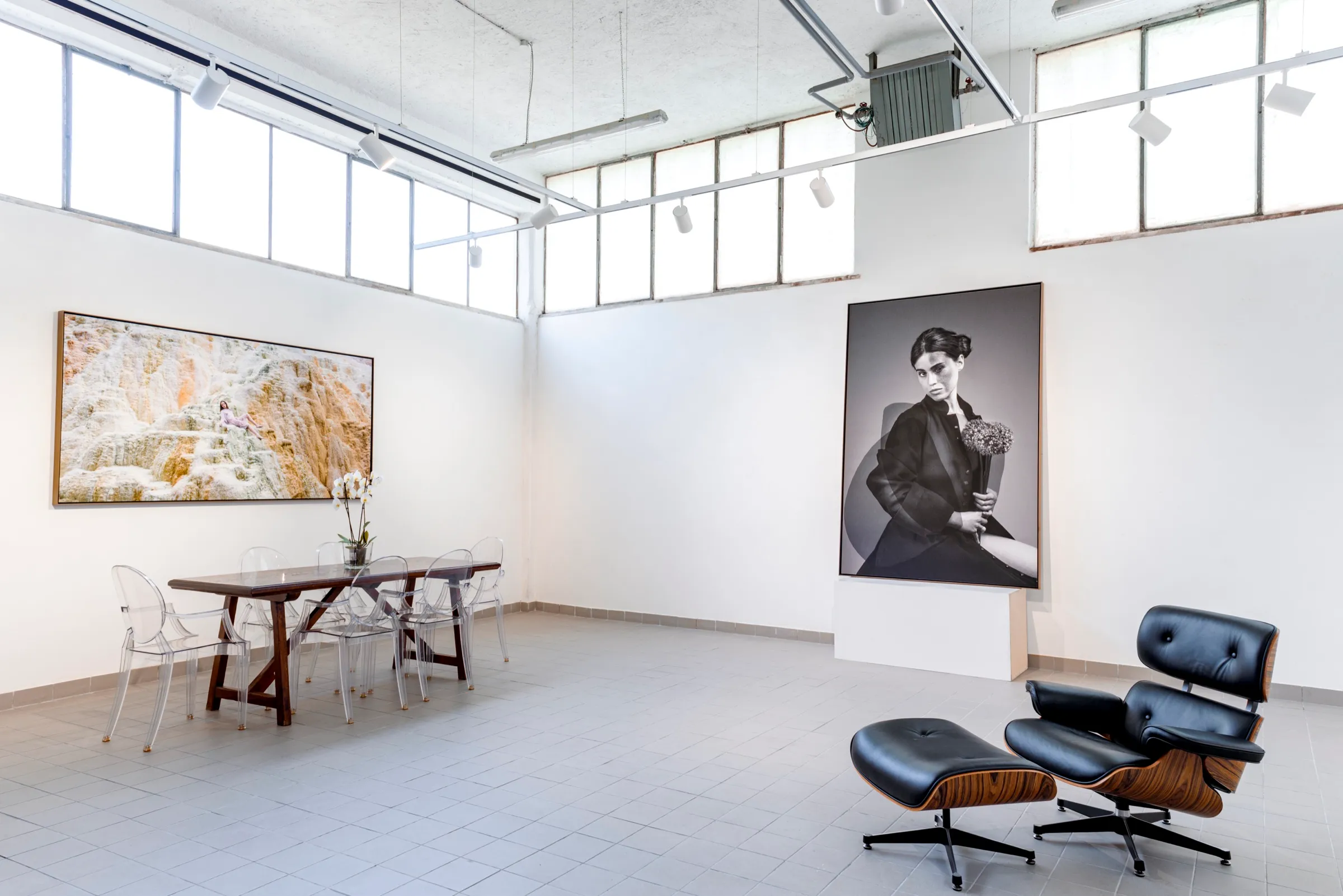
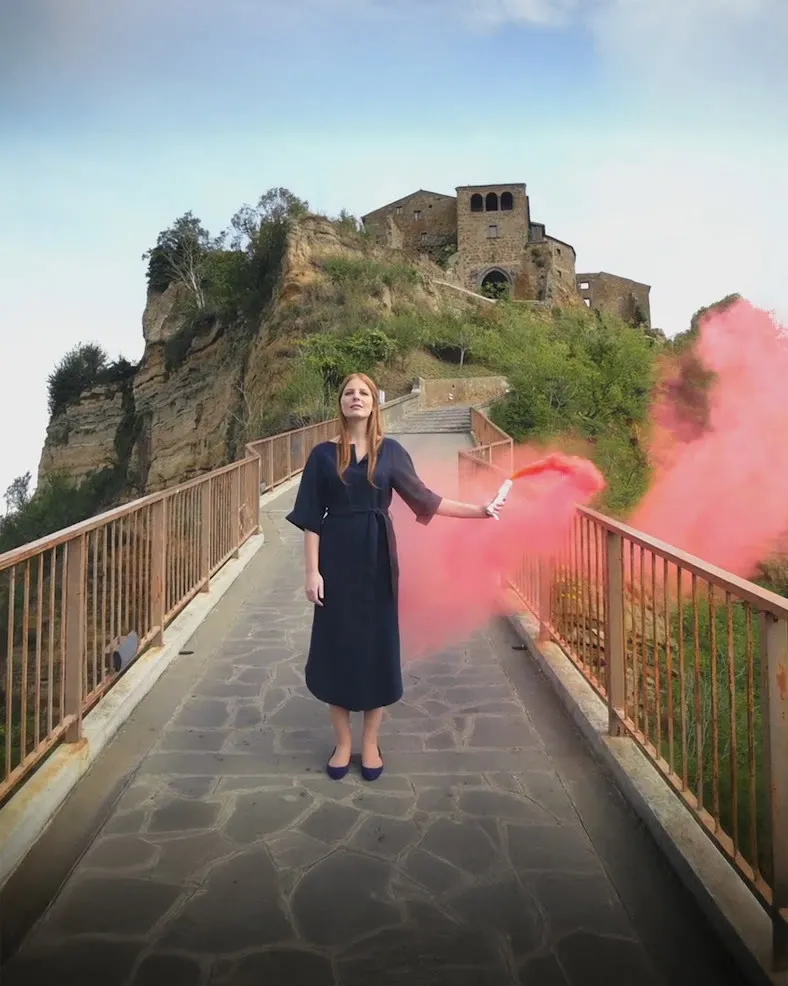
In ArtistProof’s work the shift came in stages. With TIM NEXT, the augmented reality app conceived and developed by the studio turned the posters into the way into interactive stories, with different choices and paths: the print stayed on the walls and the story opened on the phone. In Magnifica Humanitas, Matteo Basilé’s exhibition at the Italian Cultural Institute in Paris, the works are phygital in the second sense, because bringing a device close opens another state of the image. Intermundia, an exhibition system still in development, takes the same idea into museums and galleries, with works that tell their own story, change, or ask the visitor to complete them.
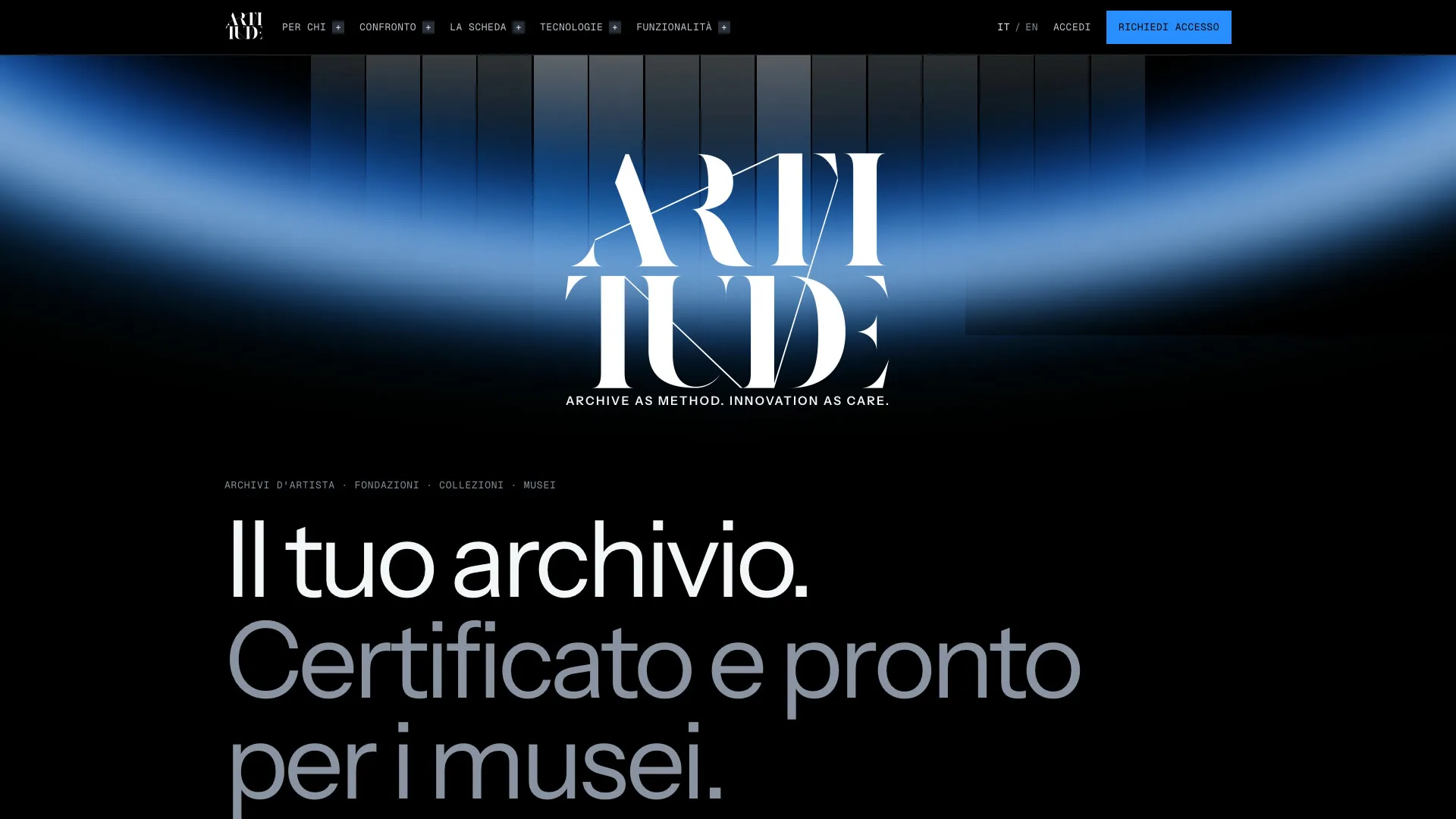
One less visible question remains, and it concerns conservation. A pigment print on cotton paper lasts for decades; augmented reality content lasts as long as the service that hosts it. That is why in ARTITUDE, the platform the studio developed for artist archives, augmented reality content is linked to the artwork’s record, alongside dimensions, techniques, provenance and certificate. The digital layer of a phygital work has to be catalogued the way one catalogues a signed back or an exhibition stamp, because in fifty years someone will need to know it was there.
At the National Gallery the frame of The Ambassadors has a shallow outer moulding, designed to let the skull be seen from the side. The digital layer needs its frame too.
Sources
- Momentum Worldwide, «The New York Times: Retailers Get ‘Phygital’» (opens in a new tab)
- Amazon Ads, «Phygital», guida (opens in a new tab)
- Vocabolario Treccani, «digitale» (opens in a new tab)
- The National Gallery, Hans Holbein the Younger, «The Ambassadors», 1533 (opens in a new tab)
- T. P. Caudell, D. W. Mizell, «Augmented reality: an application of heads-up display technology to manual manufacturing processes», Proceedings of the 25th Hawaii International Conference on System Sciences, IEEE, 1992 (opens in a new tab)
- C. Maurizio, «Digital art, cosa va di moda: videomapping, esperienze immersive, ecco i trend», Agenda Digitale, 25 agosto 2022 (opens in a new tab)
- HENI, «Damien Hirst: The Currency», Newport Street Gallery, 2022 (opens in a new tab)
- ArtistProof, TIM NEXT, scheda del lavoro (opens in a new tab)
- ARTITUDE (opens in a new tab)
Credits
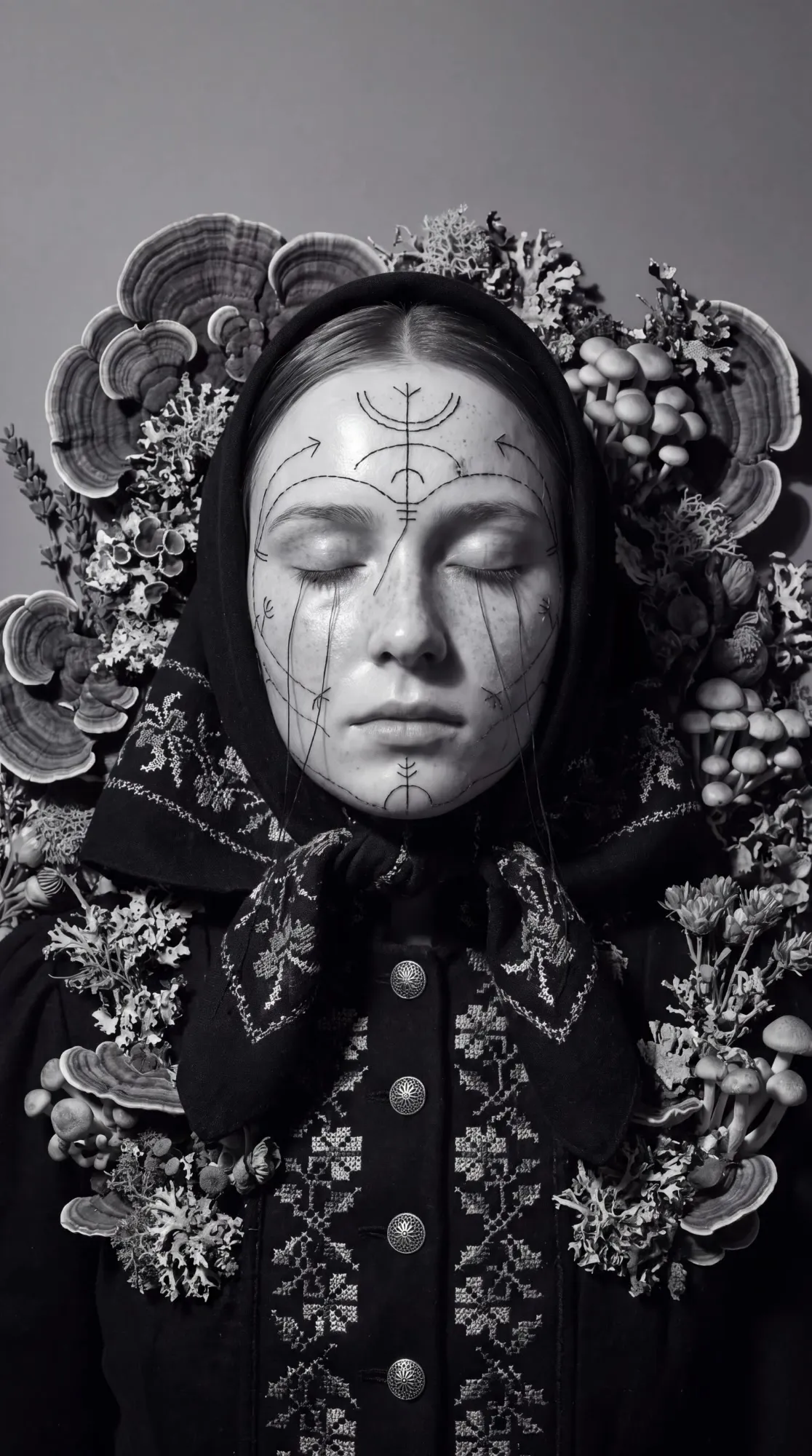
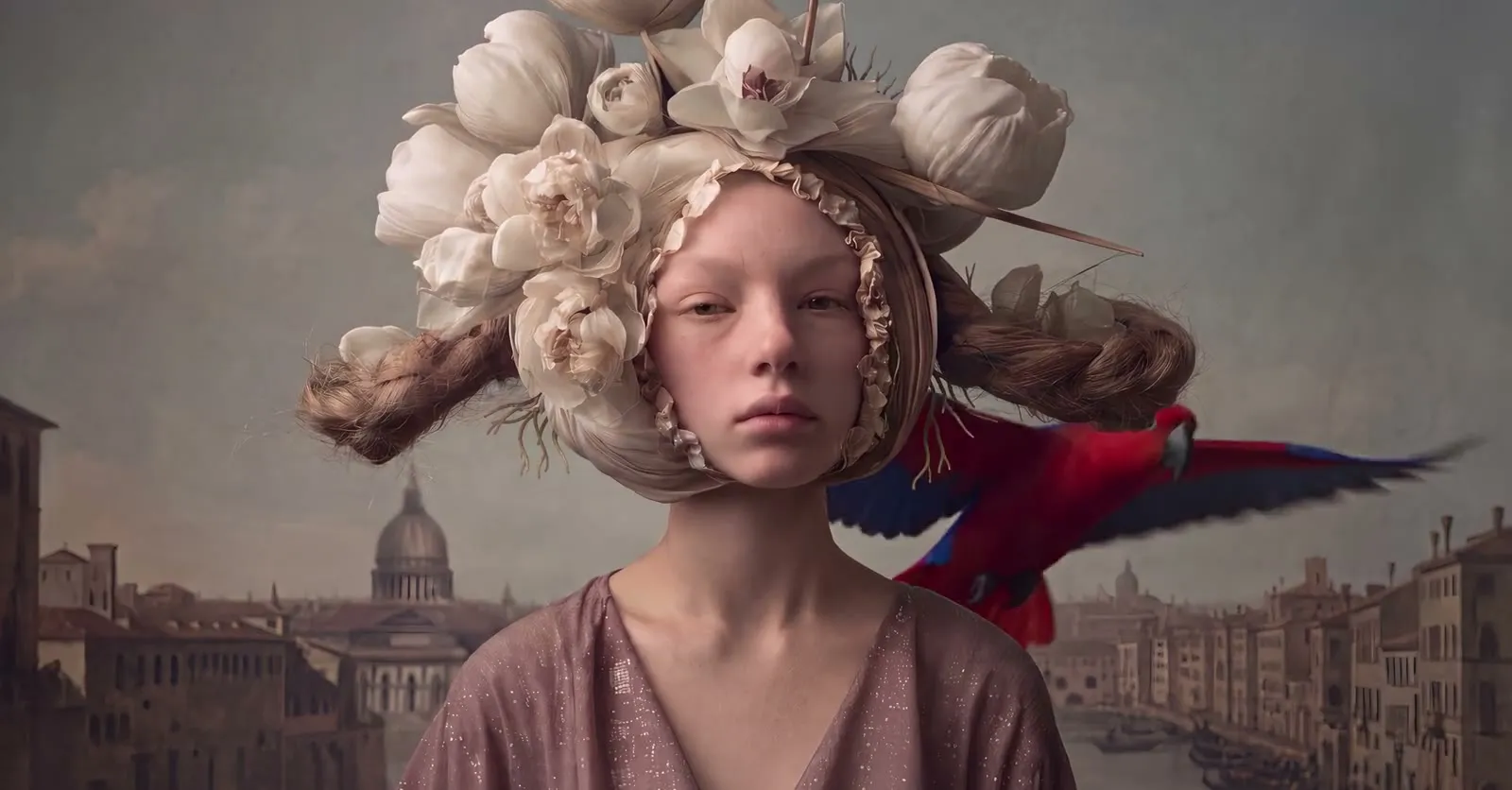
Opening image: Intermundia, a research project by ArtistProof. In the text: TIM NEXT, augmented reality app by ArtistProof, directed by Matteo Basilé; ARTITUDE, a platform by ArtistProof.